
Okay, so check this out—I’ve been testing browser extension wallets for years. Really. At first it felt like déjà vu every time: new chains, new bridges, same old UI quirks. Whoa! The multi‑chain promise sounded great. In practice, though, gas fee surprises and clunky token management kept biting me. My instinct said: there has to be a better way.
I tried a few wallets. Initially I thought they were all the same, but then I noticed patterns: some extensions nailed UX but skimped on security details; others were paranoid about safety but felt like using a relic from 2009. On one hand, you want a wallet that plays nice with many chains. On the other hand, you want something that doesn’t make you feel like you’re juggling flaming torches. Honestly? That tension is what drew me to more specialized multi‑chain wallets.
Here’s what bugs me about typical wallet setups: they show a long token list that gets messy fast. Transactions default to annoying gas prices. And cross‑chain interactions are generally handled by a maze of manual steps. Hmm… my head spun a bit while testing. But then Rabby came up repeatedly in conversations with devs and power users. I decided to give it a proper run.
What “multi‑chain” actually needs to mean
Multi‑chain isn’t just about adding networks to a dropdown. No. It’s about consistent UX across different EVM chains, reliable chain detection, and safe handling of approvals and signatures. Seriously? Yes. If your wallet treats Binance Smart Chain like an afterthought, you’re going to have a bad time. A good multi‑chain wallet should: surface chain‑specific data clearly, prevent accidental approvals, and make bridging or switching feel natural—without hiding important security signals.
Initially I thought more networks would complicate things, but then realized that well‑designed wallets make complexity invisible. Actually, wait—let me rephrase that: the best wallets handle complexity in the background while keeping the user firmly in the driver’s seat. Somethin’ about that balance is satisfying.
Why Rabby caught my attention
I’m biased, but Rabby nails several of the points I care about. For clarity: I mean the browser extension focused on multi‑chain usability and safety. The UX anticipates mistakes—like approving unlimited allowances—and provides tailored actions per network. On the whole, it just feels considered. My first impression was: this is built by people who actually use wallets every day.
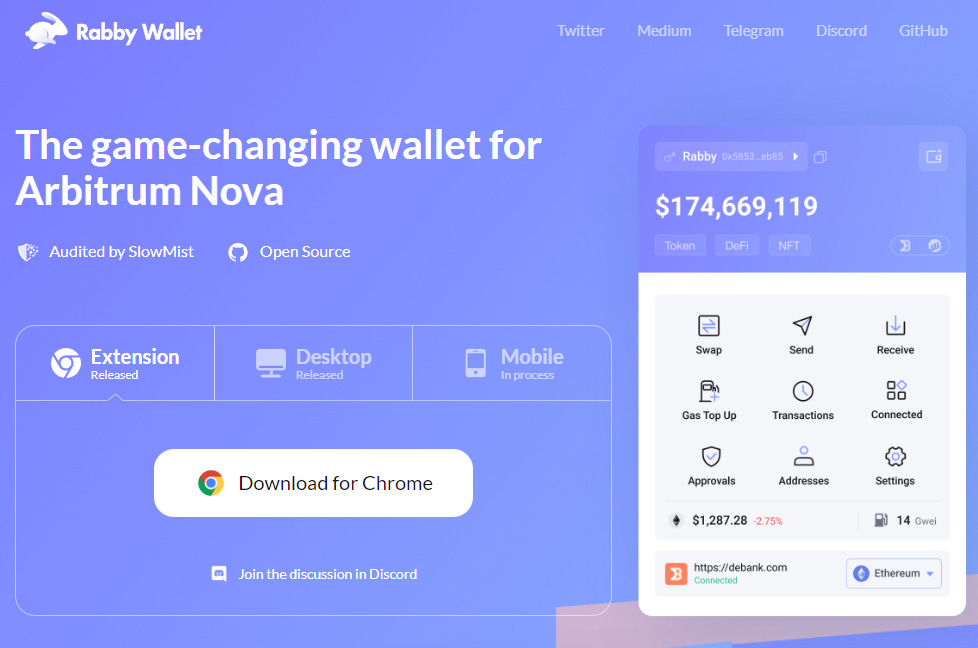
If you want to try it for yourself, you can download it here: rabby wallet. Quick tip: always verify the extension source and the store listing. Yep, that sounds basic, but it’s the very thing people skip in a rush.
On one hand, Rabby puts approval management front and center. On the other, it adds smart transaction insights (gas estimates and sanity checks) that reduce dumb mistakes. Though actually, there are tradeoffs: power users may want deeper customizability in some niche chains, and occasionally a network behaves in a way that forces manual workarounds. Still—on balance—it’s a big step up from the rougher, older extensions.
Security and workflow I care about
I’ll be honest: I’m picky about security. I look for three things. First, clear permission prompts. Second, easy revocation of allowances. Third, strong isolation of wallet data. Rabby addresses these in ways that felt practical while I was setting up multiple accounts and testing dApps.
Initially I worried that adding features would make the UI noisy, but Rabby keeps the interface relatively clean. Actually, wait—there’s some learning curve. You should expect to click a couple extra times to see transaction details. That’s worth it if you ask me. Why? Because a few extra seconds often stop you from approving something you shouldn’t.
One thing that always surprised me: good wallets also educate. A tiny alert about token contract risks? Useful. A prompt when approving unlimited allowances? Critical. These small nudges are the sort of details that prevent expensive mistakes, especially when you’re hopping between networks at odd hours.
Real world workflow — what I do day to day
My routine is simple. I keep one account for mainstream activity (trading, LPs) and another for experiments. Short sentence. I switch networks quickly. I check gas estimates. I confirm approvals only when necessary. This works because the wallet makes each step transparent. Somethin’ about the feedback loop—info, pause, confirm—keeps me from moving too fast.
On bridges, I prefer to pre‑approve minimal allowances and increase them as needed. On smart contract interactions I open the contract in a block explorer if anything looks off. Yup, that’s slightly paranoid. But when you’re handling value across chains, paranoia is a reasonable baseline. I’m not 100% sure every feature will cover every edge case, though; so I still keep a hardware wallet for high‑value transfers.
Troubleshooting and common hiccups
Sometimes networks are slow. Sometimes tokens don’t show up automatically. Sometimes a dApp asks for an approval that seems unusual. Those are the moments you want sensible prompts and easy undo actions. In my testing, Rabby made it straightforward to revoke allowances and re‑sync token lists. It didn’t fix every weirdness—no wallet can—but it made recovery less painful.
Anecdote: once I almost approved an unlimited allowance on a low‑liquidity token at 3 a.m. (long night). The wallet highlighted the unlimited nature and I caught it—luckily. That single feature saved me from a headache. So yes: practical UI choices matter.
FAQ
Is Rabby safe to use?
No wallet is perfectly safe, but Rabby incorporates useful safety features—like approval management and transaction checks—that reduce common risks. Always verify extension sources and consider using a hardware wallet for large holdings.
Can I use Rabby across many EVM chains?
Yes. It supports multiple EVM chains and aims for consistent UX across them. Expect occasional manual steps for less‑common chains, but mainstream networks are generally smooth.
How do I download it?
Get the extension from the official listing and follow the setup prompts. Here’s the download page: rabby wallet. (Only one link above—bookmarked it for you.)